Retaining Wall Installer in National City, CA
Professional retaining wall installation, repair, and design services for homeowners in National City. From concrete and block walls to natural stone and hillside solutions, every project starts with proper drainage and site preparation. A wall built without the right foundation, backfill, and water management is a wall that will eventually fail.
Retaining Wall Services in National City
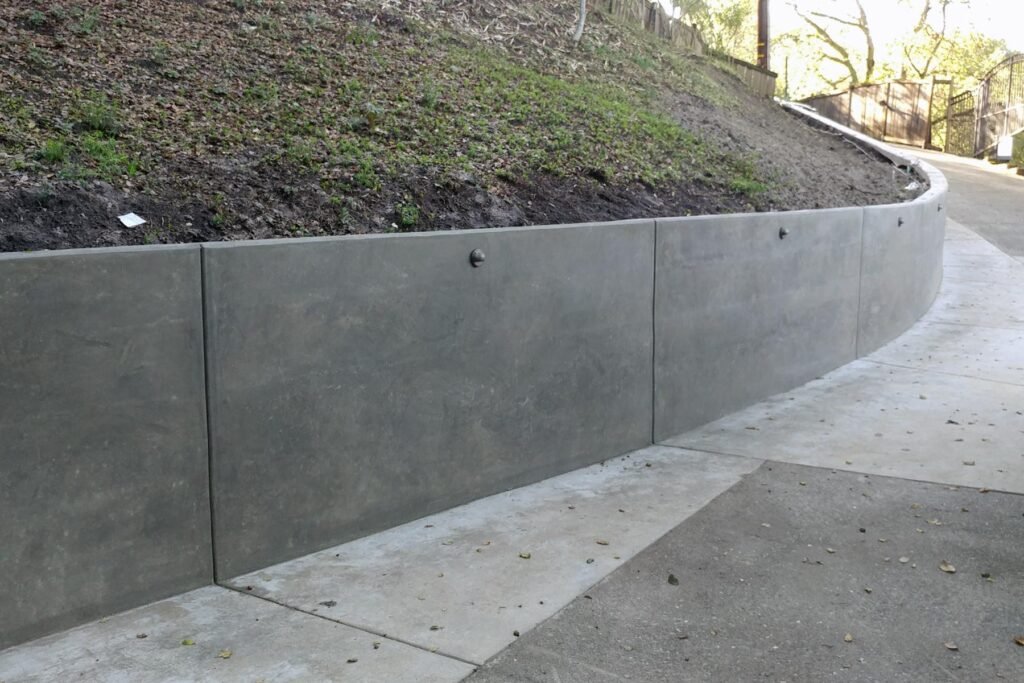
Retaining Wall Installation
New retaining wall construction starts with understanding what the wall needs to do — hold back a slope, level a yard, or create a terraced garden bed. Soil retention is the core function, but the wall also has to account for drainage, erosion control, and long-term landscaping plans.
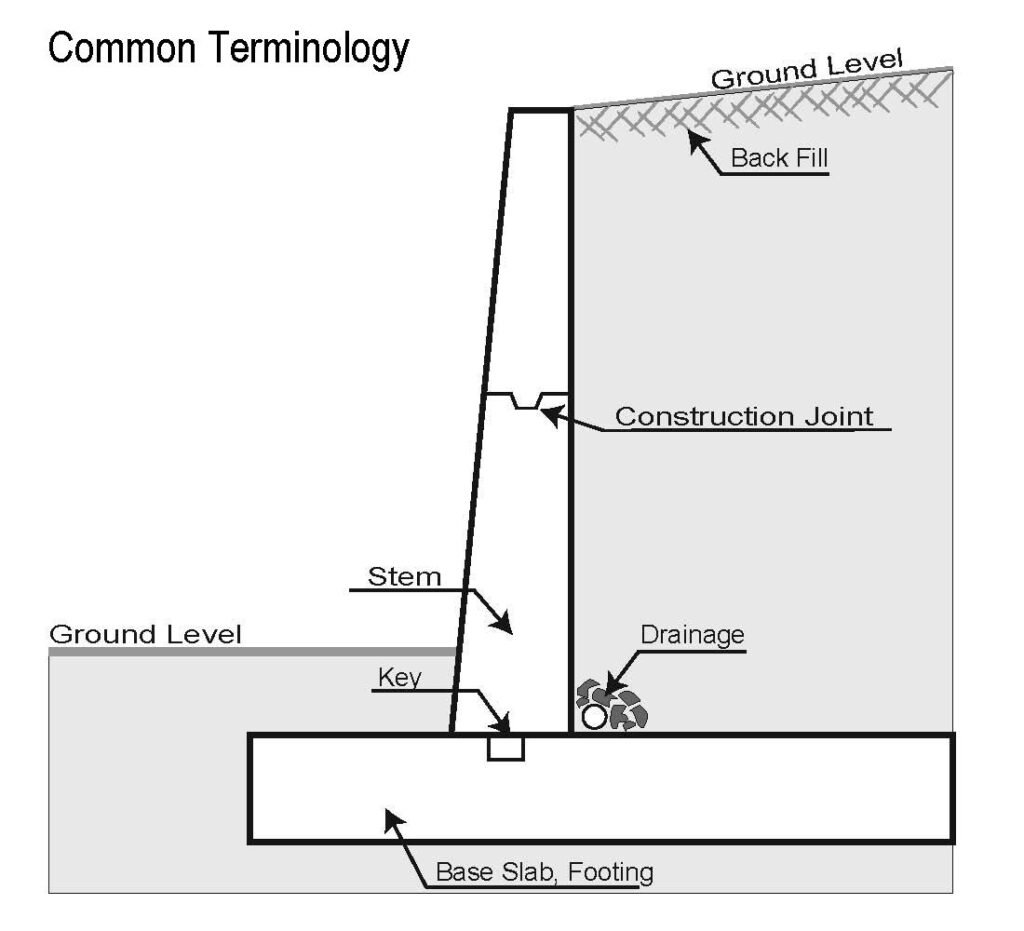
Every new installation involves excavation to the proper depth, a compacted base to support the wall’s weight, and a drainage plan that routes water away from the structure. Skipping any of these steps shortens the life of the wall significantly.
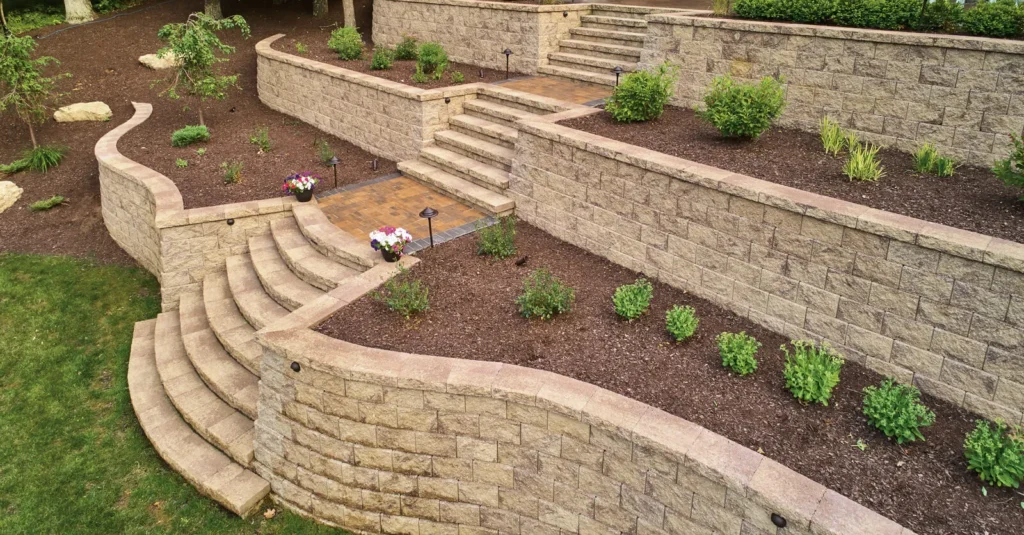
Retaining Wall Repair
Existing walls develop problems for predictable reasons: age, poor original drainage, soil pressure, or water infiltration. Common issues include cracking, leaning, bulging, settling, and sections that have separated from the rest of the wall.
Some problems can be repaired — repointing cracks, improving drainage behind the wall, or resetting individual blocks or stones. Others, particularly walls with significant leaning or structural movement, are better addressed with a full or partial rebuild. The right approach depends on the extent of the damage and the underlying cause.
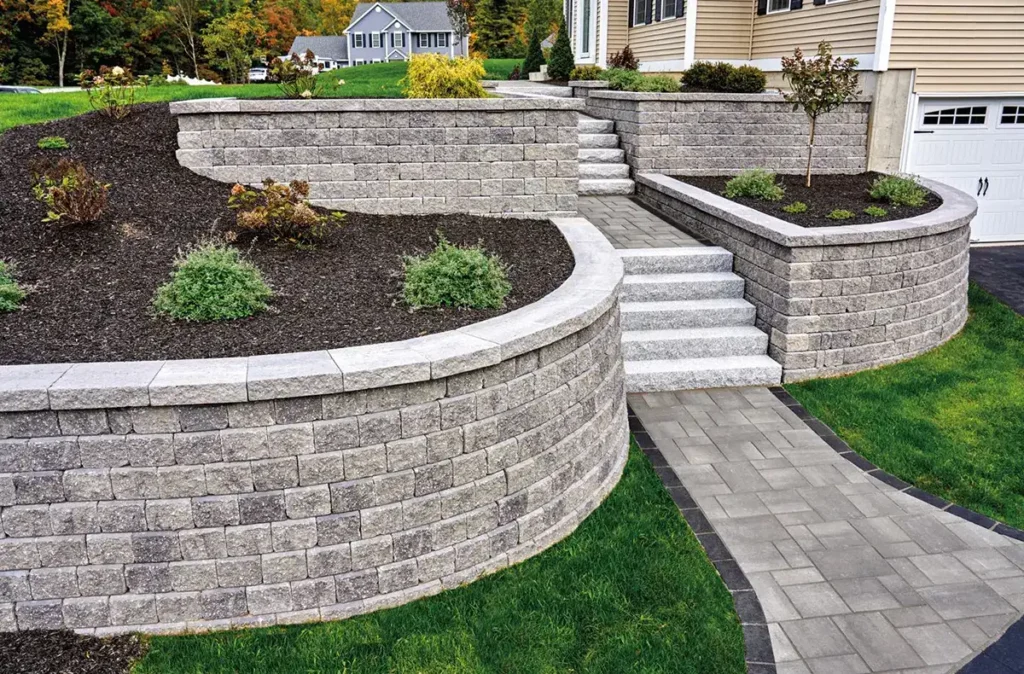
Concrete Retaining Walls
Poured concrete retaining walls are known for their strength and durability, making them a strong option for taller walls or walls that need to hold back significant soil loads. Concrete also allows for design flexibility, including curved walls, custom heights, and various finish textures.
Construction requires accurate formwork, reinforcement (typically rebar), and proper curing time. Concrete walls work well in situations where load-bearing strength is the top priority.
Block Retaining Walls
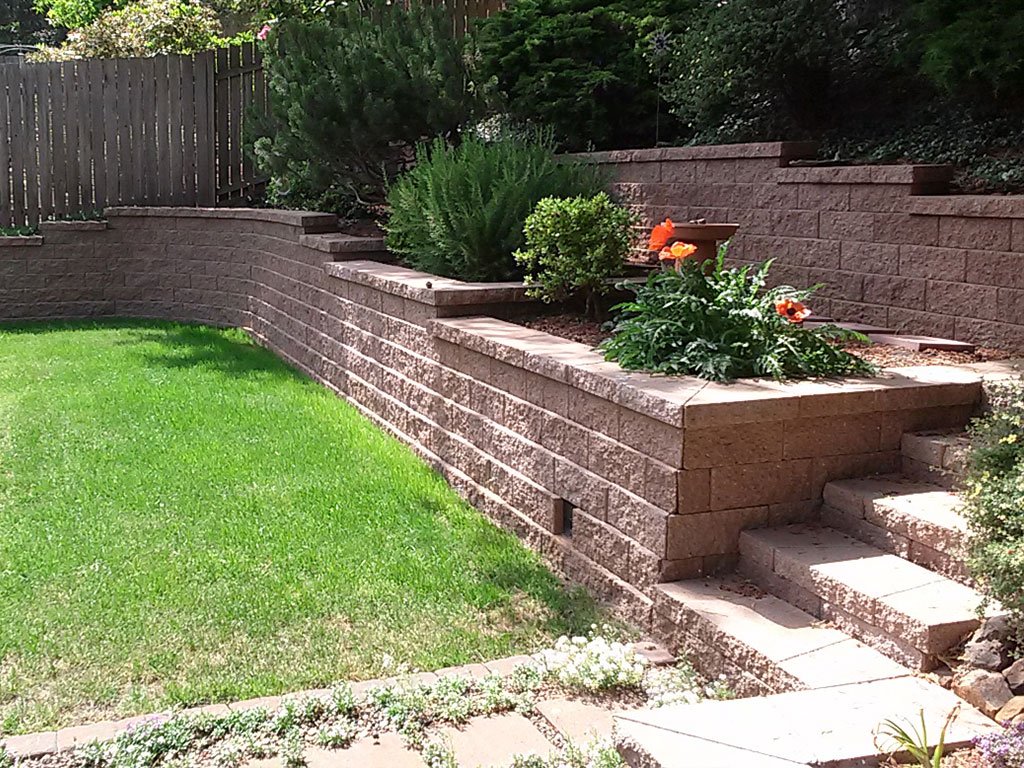
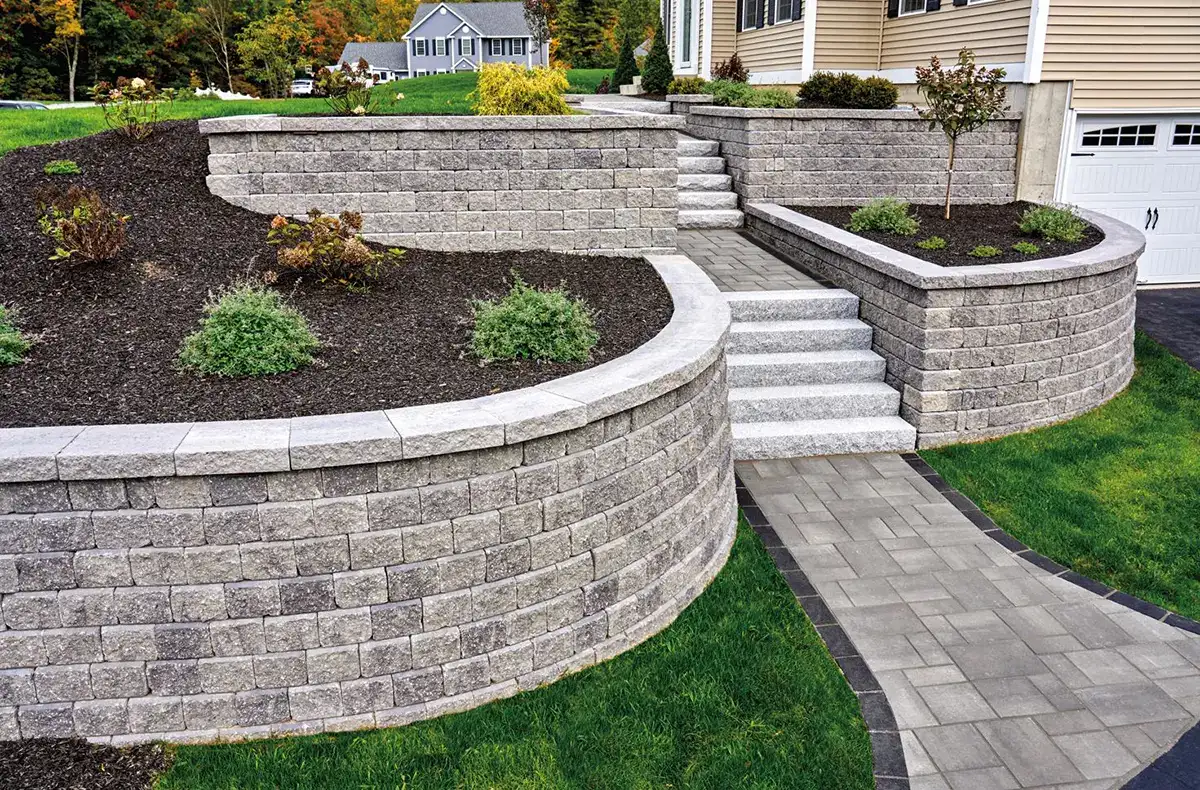
Segmental (modular) concrete block walls are one of the most common residential retaining wall systems. Interlocking blocks are stacked without mortar, which allows for straightforward construction and a clean, uniform appearance.
Block walls offer good durability for typical residential heights and are available in a range of colors and textures. Proper drainage — usually gravel backfill and a perforated drain pipe — is essential behind block walls to prevent water buildup between the blocks.
Natural Stone Retaining Walls
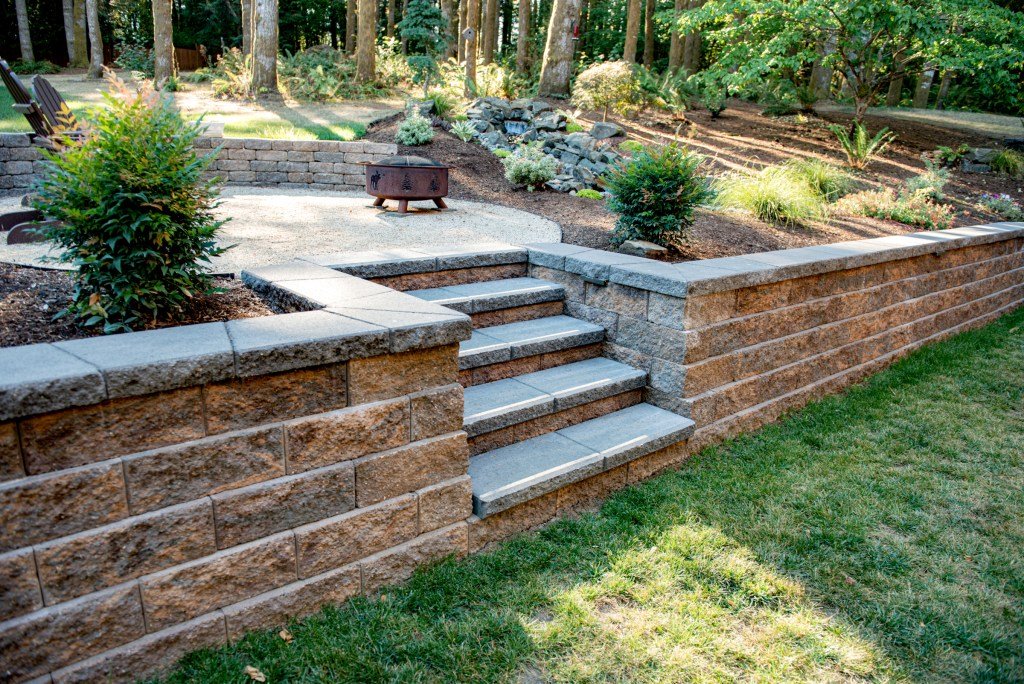
Natural stone walls offer a look that manufactured materials can’t fully replicate — each stone varies in shape, color, and texture, giving the wall a more organic, landscaped appearance. Stone integrates well with existing gardens, pathways, and outdoor living spaces.
Because stone pieces vary in size and shape, construction takes more skill to fit pieces securely and maintain structural stability. Stone walls are durable over the long term but generally require more careful initial installation than uniform block systems.
Hillside Retaining Walls
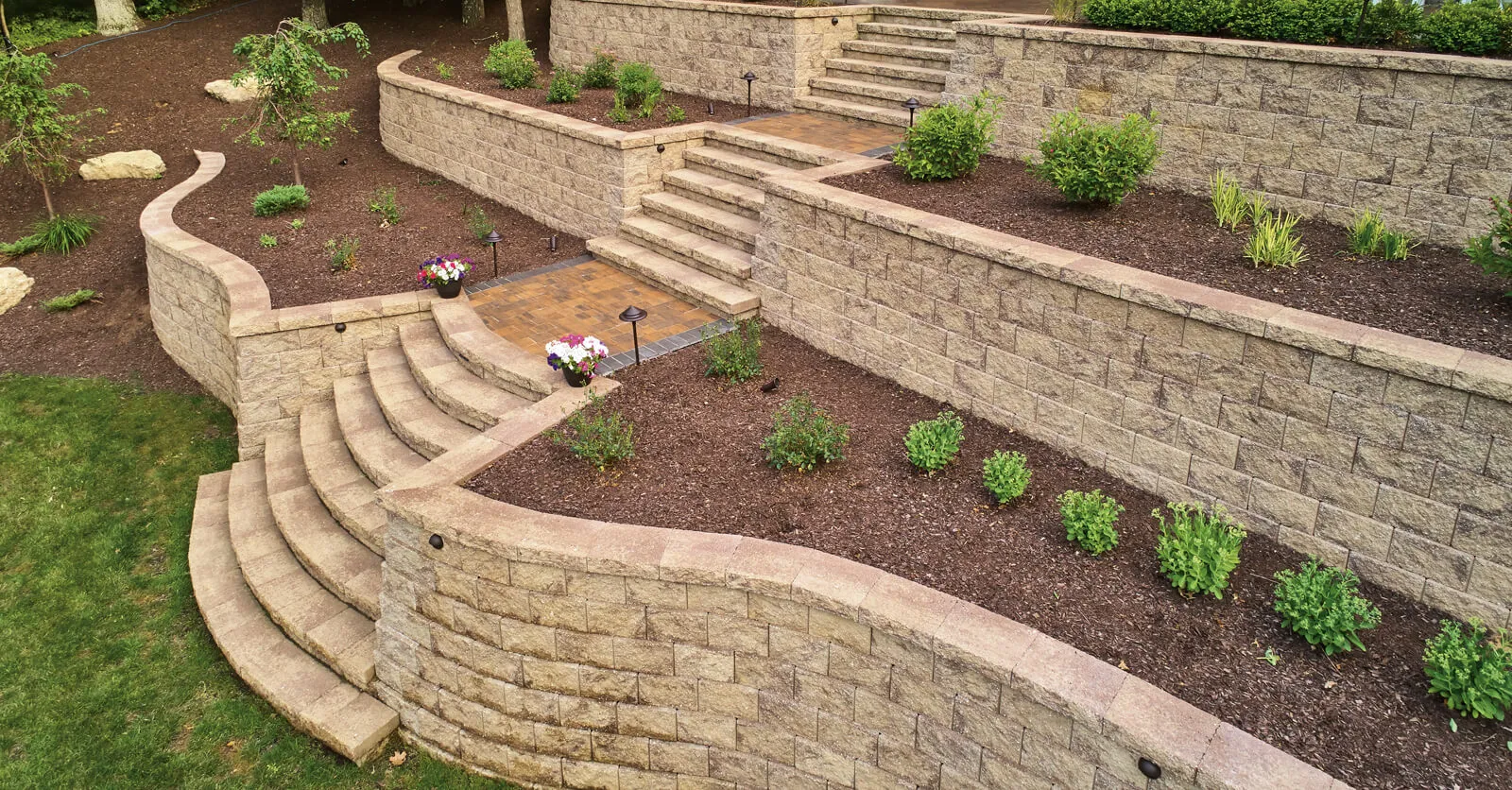
Sloped properties present unique challenges: soil that’s more prone to erosion, drainage that has to move water downhill safely, and the need for stronger reinforcement as wall height increases. Hillside walls are often built in tiers, or “terraces,” to break a steep slope into manageable, usable sections.
Depending on the height and slope of the hillside, taller retaining wall projects may require engineering review to confirm the wall design can safely handle the soil load. Hillside walls also need drainage systems designed specifically for water moving downhill, not just water sitting behind a flat wall.
Let's Start Your Retaining Wall Project in National City
Let’s chat about your ideas! Getting started is easy – simply reach out with details about your retaining wall project!
What Homeowners Should Know About Retaining Walls in National City
A retaining wall’s performance depends on details that aren’t always visible once construction is finished. Wall height and length determine how much soil pressure the structure has to resist — taller and longer walls carry more load and generally require stronger construction methods.
Soil pressure builds behind every retaining wall, especially after rain when saturated soil is heavier and pushes harder against the wall face. This is why drainage isn’t a secondary consideration — it’s one of the main factors in whether a wall holds up over time.
Excavation and base preparation set the foundation for everything that follows. A base that isn’t compacted properly, or excavated to the correct depth, can allow a wall to shift or settle unevenly.
Footings, backfill, and reinforcement each play a role depending on the wall type and height. Footings provide a stable base for taller or load-bearing walls. Backfill material (typically gravel, not the original excavated soil) allows water to drain rather than pool behind the wall. Reinforcement — geogrid, rebar, or engineered tiebacks — helps the wall resist soil pressure as height increases.
Property grading affects how water moves across a yard before it ever reaches the wall. Material selection should account for the wall’s purpose, height, and how it fits with existing landscaping. Site access also matters for construction — tight side yards or hillside lots may require different equipment or staging than a wide-open backyard.
Getting these elements right the first time affects the wall’s structural stability, drainage performance, appearance, and how much maintenance it needs over its lifespan.
How Much Does a Retaining Wall Cost in National City?
| Project Type | Typical Cost Range | Factors Affecting Price |
|---|---|---|
| Small block wall (under 3 ft) | $3,500 – $9,000 | Length, site access, drainage |
| Concrete retaining wall | $8,000 – $25,000+ | Height, reinforcement, formwork, finish |
| Natural stone wall | $9,000 – $30,000+ | Stone type, labor complexity, wall height |
| Hillside/terraced wall system | $15,000 – $50,000+ | Slope severity, engineering, drainage, multiple tiers |
| Retaining wall repair | $1,500 – $12,000+ | Extent of damage, repair vs. partial rebuild |
These ranges reflect broad industry norms and are not quotes. Actual project costs depend on wall dimensions, materials, soil and drainage conditions, site access, and the amount of excavation and reinforcement required.
Factors That Affect Retaining Wall Cost
Several variables influence the final price of a retaining wall project:
- Wall height and length
- Material choice (concrete, block, or stone)
- Excavation volume and soil conditions
- Drainage system requirements
- Backfill material
- Reinforcement (geogrid, rebar, tiebacks)
- Engineering review, when required by wall height or slope
- Site access for equipment and materials
- Existing landscaping that needs to be worked around
- Overall labor complexity
Local National City Factors That Can Affect Cost
National City properties vary significantly from block to block. Flatter, western portions of the city tend to have more straightforward yard grading, while areas closer to the eastern canyons and ridgelines can involve steeper slopes and more complex drainage needs.
Existing hardscape, mature landscaping, fencing, or limited side-yard access can all add time and cost to a project. Not every property has the same conditions, which is why an accurate estimate depends on evaluating the specific site rather than applying a flat citywide price.
Why Detailed Estimates Matter
An accurate estimate starts with real measurements and an on-site evaluation, not a phone-quoted price. Site conditions — soil type, existing drainage, slope, and access — all factor into material selection and the reinforcement the wall will need.
A detailed estimate defines the project scope clearly upfront, which helps homeowners avoid unexpected costs once construction is underway.
Retaining Wall Installation in National City, CA
National City sits within San Diego County’s South Bay region, along the eastern shore of San Diego Bay. The city’s terrain varies noticeably from west to east: the western part of National City is largely flat, while the eastern portions include canyons and ridges.
The Sweetwater River runs along part of the area, flowing through a flood control channel on its way to San Diego Bay. Like much of San Diego County, the region’s natural vegetation is chaparral — drought-resistant shrubland adapted to a Mediterranean climate of dry summers and cooler, wetter winters.
Residential development in National City includes established neighborhoods with a mix of lot sizes and grading conditions. Properties nearer the flatter western areas typically deal with different drainage and grading concerns than those closer to the hillier eastern sections of the city.
National City at a Glance
- Location: South Bay region of San Diego County, along the eastern shore of San Diego Bay
- Terrain: Flat in the western portion of the city; canyons and ridges in eastern areas
- Climate: Mediterranean climate typical of coastal San Diego County — dry summers, cooler wet winters
- Housing: Established residential neighborhoods with varied lot sizes and grading
- Population: 56,173 residents as of the 2020 U.S. Census
Why National City Homeowners May Need Retaining Walls
Properties on or near sloped terrain, particularly in the eastern parts of the city, are more likely to deal with soil movement and erosion than flatter lots. A retaining wall can stabilize soil on these grades and reduce erosion over time.
Drainage is a factor across the city regardless of terrain, since water still has to go somewhere once it reaches a yard. Retaining walls, when built with proper drainage, help direct that water safely rather than letting it undermine landscaping or foundations.
For yards with grade changes, a retaining wall can also convert unusable sloped space into a level area for patios, gardens, or other outdoor living features. Not every property needs a retaining wall — the right approach depends on each yard’s specific grading, soil, and drainage conditions.
Why Choose Retaining Wall Installer Imperial Beach?
Local Knowledge of National City Properties
National City includes a mix of flatter residential blocks and areas closer to canyons and ridgelines, each with different grading and drainage considerations. Understanding these differences helps inform the right approach for each property.
Quality Materials and Construction Practices
Concrete, block, and natural stone each have specific installation requirements. Following correct excavation, base preparation, and reinforcement practices for the chosen material is central to how a retaining wall performs over time.
Attention to Drainage and Site Preparation
Drainage is one of the most common points of failure in retaining walls, which is why it’s treated as a core part of every project rather than an afterthought.
Clear Communication
Homeowners get a clear explanation of the wall’s design, materials, and expected timeline before work begins, along with a defined project scope.
Homeowner-Focused Service
Every property is different, and estimates are based on an actual site evaluation rather than a generic price applied across the board.
Areas We Serve Near National City
In addition to National City, retaining wall installation and repair services are available throughout nearby South Bay communities, including Chula Vista, Eastlake, Otay Ranch, Imperial Beach, Bonita, and San Ysidro.
Need Help?
Frequently Asked Questions About Retaining Walls in National City
Below are some of the most common questions Our Network get from families about Retaining Wall. If you have any other questions contact us!
How much does a retaining wall cost in National City?
Most residential retaining wall projects fall somewhere between $3,500 and $30,000 or more, depending on the wall’s height, length, and material. Larger hillside or engineered wall systems can exceed that range. Getting an accurate number requires a site evaluation, since soil conditions, drainage needs, and access all affect the final cost.
How long does retaining wall installation take?
Smaller block or concrete walls (under 3–4 feet) can typically be completed in a few days to about a week. Larger or terraced hillside systems, especially those requiring engineering or extensive excavation, can take several weeks. Weather, site access, and material lead times can also affect the schedule.
How long do retaining walls typically last?
A well-built retaining wall with proper drainage can last 30 to 50 years or more, depending on material and construction quality. Concrete and stone walls tend toward the longer end of that range, while poorly drained or improperly built walls can fail in a fraction of that time.
What type of retaining wall is best for a residential property?
It depends on the wall’s purpose and height. Segmental block walls are a common, cost-effective choice for typical residential heights, while concrete offers more strength for taller applications, and natural stone provides a more custom, landscaped look. The best option balances height requirements, budget, and aesthetic goals.
How does drainage affect retaining wall performance?
Drainage is one of the biggest factors in whether a retaining wall succeeds or fails. Without a way for water to escape, hydrostatic pressure builds behind the wall, leading to leaning, bowing, or cracking over time. Gravel backfill and drain pipes are standard components used to manage this pressure.
When should a retaining wall be repaired instead of replaced?
Minor issues — small cracks, isolated drainage problems, or slight settling in a limited area — can often be repaired without rebuilding the whole wall. Significant leaning, widespread bulging, or structural movement across large sections usually points toward a rebuild, since the underlying cause is more likely a foundational or design issue.
How tall can a retaining wall be?
Many residential retaining walls fall in the 2 to 6 foot range, though taller walls are possible with the right engineering and reinforcement. As wall height increases, so does the soil pressure the structure needs to resist, which is why taller walls often require additional design considerations such as tiebacks, geogrid reinforcement, or engineering review.
Contact Retaining Wall Installer Imperial Beach Today
Whether it’s a new retaining wall, a hillside terrace, or repairs to an existing wall showing signs of trouble, getting the drainage, materials, and construction right from the start makes the difference in how long it lasts. Free, no-pressure estimates are available for homeowners in National City and surrounding communities, including Chula Vista, Eastlake, Otay Ranch, Imperial Beach, Bonita, and San Ysidro. Help is available with selecting the right materials and planning a project that fits the property.